
See the widget at the right showing if your browser+computer supports WebCL? It is available under the GPL 2.0 license and based on code from WebCL@NokiaResearch (thanks guys for your great Firefox-plugin!) Download from WordPress.org and unzip in /wp-content/plugins/. Or (better),…
The 13 application areas where OpenCL and CUDA can be used
Which algorithms map is best to which accelerator? In other words: What kind of algorithms are faster when using accelerators and OpenCL/CUDA? Professor Wu Feng and his group from VirginiaTech took a close look at which types of algorithms were a…
Applied GPGPU-days Amsterdam 2013
December 2013: Videos are not ready yet, but link will be put here. Amsterdam, 20 June – Applied GPGPU-days in Amsterdam. Keep your agenda free for this event. What can you do with GPUs to speed up computations? This year we…
GPU-developers, work for StreamHPC and friends
Bored at work? Go start working for one of the anti-boring GPU-expert companies: StreamHPC (Netherlands, EU), Appilo (Israel) or AccelerEyes (Georgia, US). We all look for people who know how to code GPUs. Experience is key, so you need to have…
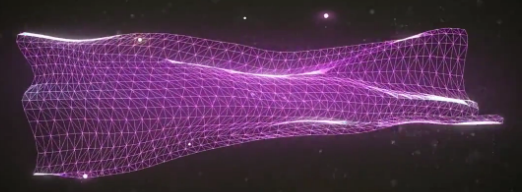
Winning demo of Tokyo Demo Fest 2013 uses OpenCL
The Tokyo Demo Fest 2013 is one of the many demo-parties around the globe. At such parties is where great programmers meet great artists and show off what came out of their collaborations. The winner of this year used OpenCL to…
Verify your OpenCL and CUDA kernels online for race conditions
GPUVerify is a tool for formal analysis of GPU kernels written in OpenCL and CUDA. The tool can prove that kernels are free from certain types of defect, such as data races and bugs. This is quite useful feedback for any…

OpenCL error codes (1.x and 2.x)
Knowing all errors by heart is good for quick programming, but not always the best option. Therefore I started to create a full list with extra info, taken from cl.h and the reference documentation. The problem with many error-codes is that…

ERSA-NVIDIA award for “Best Young Entrepreneur”
StreamHPC supports the ERSA conference, 22-25 July in Las Vegas. At that conference there will be an award given to “Best Young Entrepreneur” and I’d like you to send in a proposal. The winner gets an NVIDIA Tesla K20! Young entrepreneurs…
12-14 June: OpenCL Training Amsterdam
From 12 to 14 June StreamHPC will give a 3-day course in OpenCL (was 3 to 5 June). Here you will learn how to develop OpenCL-programs. A separate ticket for only the first day can be bought, as then will be…
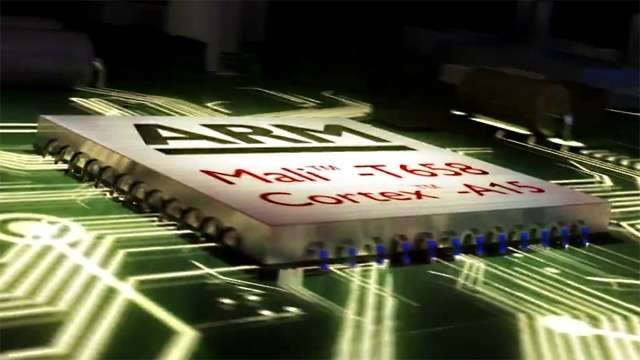
Scaling mobile GPUs to 1000 GFLOPS
On the 20th of April 2013 there was an interesting discussion between Jan Gray and David Kanter. Jan is a specialist in C++ and FPGAs (twitter, homepage). David is a specialist in CPU and GPU architectures (twitter, homepage). Both know their ways well…

Q&A with Adrien Plagnol and Frédéric Langlade-Bellone on WebCL
WebCL is a great technique to have compute-power in the browser. After WebGL which gives high-end graphics in the browser, this is a logical step on the road towards the browser-only operating system (like Chrome OS, but more will follow). Another…

LEAP-conference call for papers
Embedded processors always have had the focus on low-energy. Now a combination of Moore’s law, the frequency-wall and multi-processor developments have made it possible for these processors to compete in completely new market segments. Most notable due to impressive advancements in…
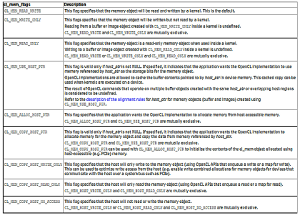
OpenCL Basics: Flags for the creating memory objects
In OpenCL large memory objects, residing in the main memory of the host or the global memory at the accelerator/GPU, need special treatment. First reason is that these memories are relatively slow. Second reason is that the most times serial copy…
Low-Energy Application Parallelism (LEAP) conference in London
For more information on the program, contact us. For information on sponsoring, contact Tim Lewis of CroftEdge. Website with more info and ticket-sales will open 1 February.
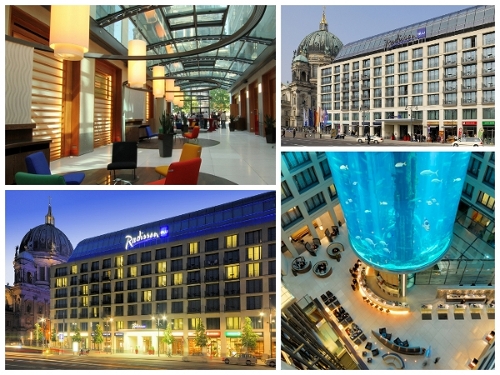
StreamHPC is at HiPEAC, Berlin
HiPEAC is the conference on “High-performance and Embedded Architectures and Compilers” to be held on 20 to 22 January in Berlin – tickets are still available, if you can spare three days. I (Vincent Hindriksen) would like to share the program…
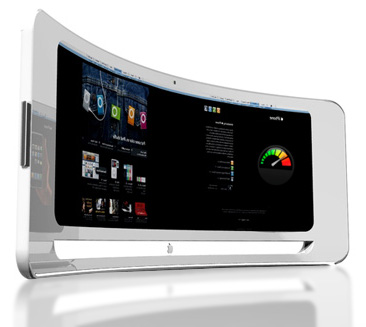
X86-workstation buying guide for OpenCL developers, Q1 2013
Important: this article was written before Intel “Haswell” and AMD “Richland” architectures came out. So you want to start developing for OpenCL? When you focus on developing OpenCL for X86, you have these three options: CPUs, GPUs and CPUs with and embedded GPU. This…

The entanglement of Bitcoins and compute-capabilities
Every now and then I read stories on Bitcoins (Wikipedia-article), as GPUs are used a lot to “mine” Bitcoins. They have some extensive benchmarks, and also their discussions giving me insights in specific parts of accelerators like GPUs. Also is this…
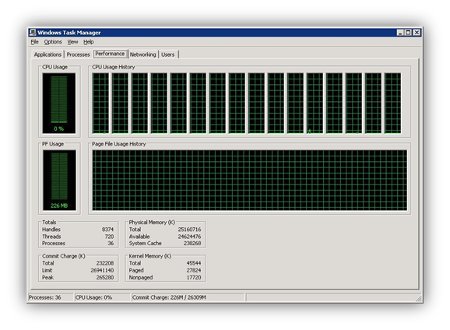
The OpenCL power: offloading to the CPU (AVX+SSE)
Say you have some data that needs to be used as input for a larger kernel, but needs a little preparation to get it aligned in memory (small kernel and random reads). Unluckily the efficiency of such kernel is very low…
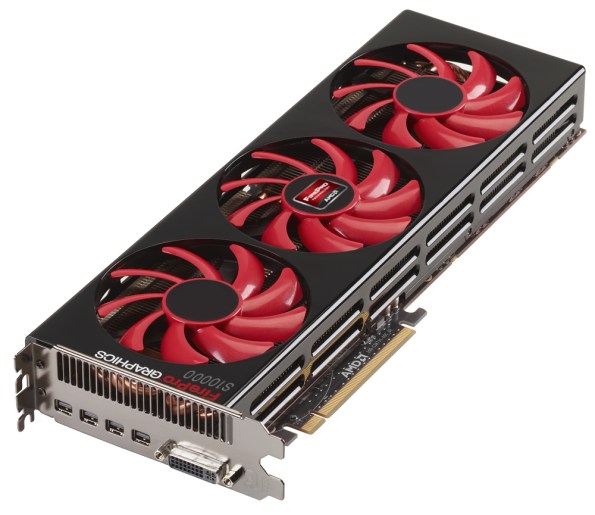
AMD positions FirePro S10000 against both TESLA K10 (and K20)
During the “little” HPC-show, SC12, several vendors have launched some very impressive products. Question is who steals the show from whom? Intel got their Phi-processor finally launched, NVIDIA came with the TESLA K20 plus K20X, and AMD introduced the FirePro S10000….
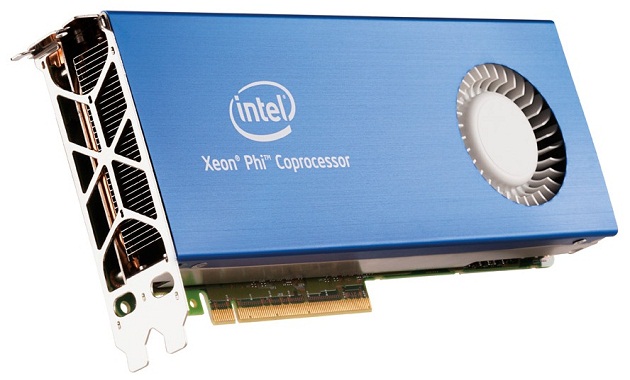
Intel’s answer to AMD and NVIDIA: the XEON Phi 5110P
NOTE: there are many contradicting sources out there, so there are mistakes in this article. Please give me feedback via twitter, mail or comments, so all the info can be completed. Yes, another post in the answer-to series. At SC12 Intel…
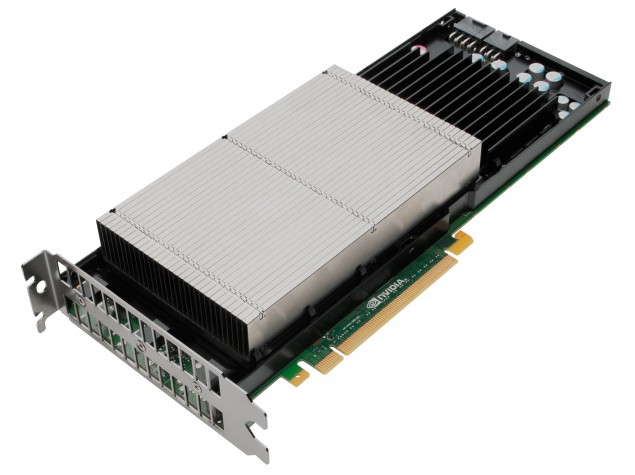
NVIDIA’s answer to FirePro S9000: the TESLA K20
Two months ago I wrote about the FirePro S9000 – AMD’s answer to the K10 – and was already looking forward to this K20. Where in the gaming world, it hardly matters what card you buy to get good gaming performance,…